
Aluminum
Common challenges and solutions in grinding aluminum
Knowlegde
Grinding aluminum
Aluminum requires a tailored approach. Due to its soft structure, discs clog more quickly, increasing the risk of surface damage.
Cibo has developed specific solutions for grinding aluminum, from removing welds to creating a uniform finish.
Most common challenges in grinding aluminum
Phase 1
Removing welds
Removing welds on flat workpieces
Removing welds on round workpieces
Removing welds in internal or 2D corners
Phase 2
Finishing and cleaning
Removing scratches
Deburring sharp edges
Clogging of a cutting disc on aluminum
View solutionPhase 3
Finishing and uniformity
Leveling the surface
Phase 1
Removing welds on flat aluminum applications
When grinding aluminum, we always use SPAG in combination with a fiber disc. A correct combination of abrasive disc and anti-clogging solution is essential.

SPAG
SPAG anti-clogging spray: the key to success with aluminum
This specially developed spray prevents grinding dust from accumulating between the grains of the abrasive disc. Using SPAG not only increases the disc’s lifespan but also improves grinding efficiency.
Order hereRecommended fiber discs


KFK
Economical
An economical alternative that still provides reliable performance for less demanding finishes.
Order hereChoose the right back-up pad
The performance of a fiber disc depends heavily on the backing pad used.
Depending on the workpiece, you choose from:


Phase 1
Removing welds on round aluminum workpieces
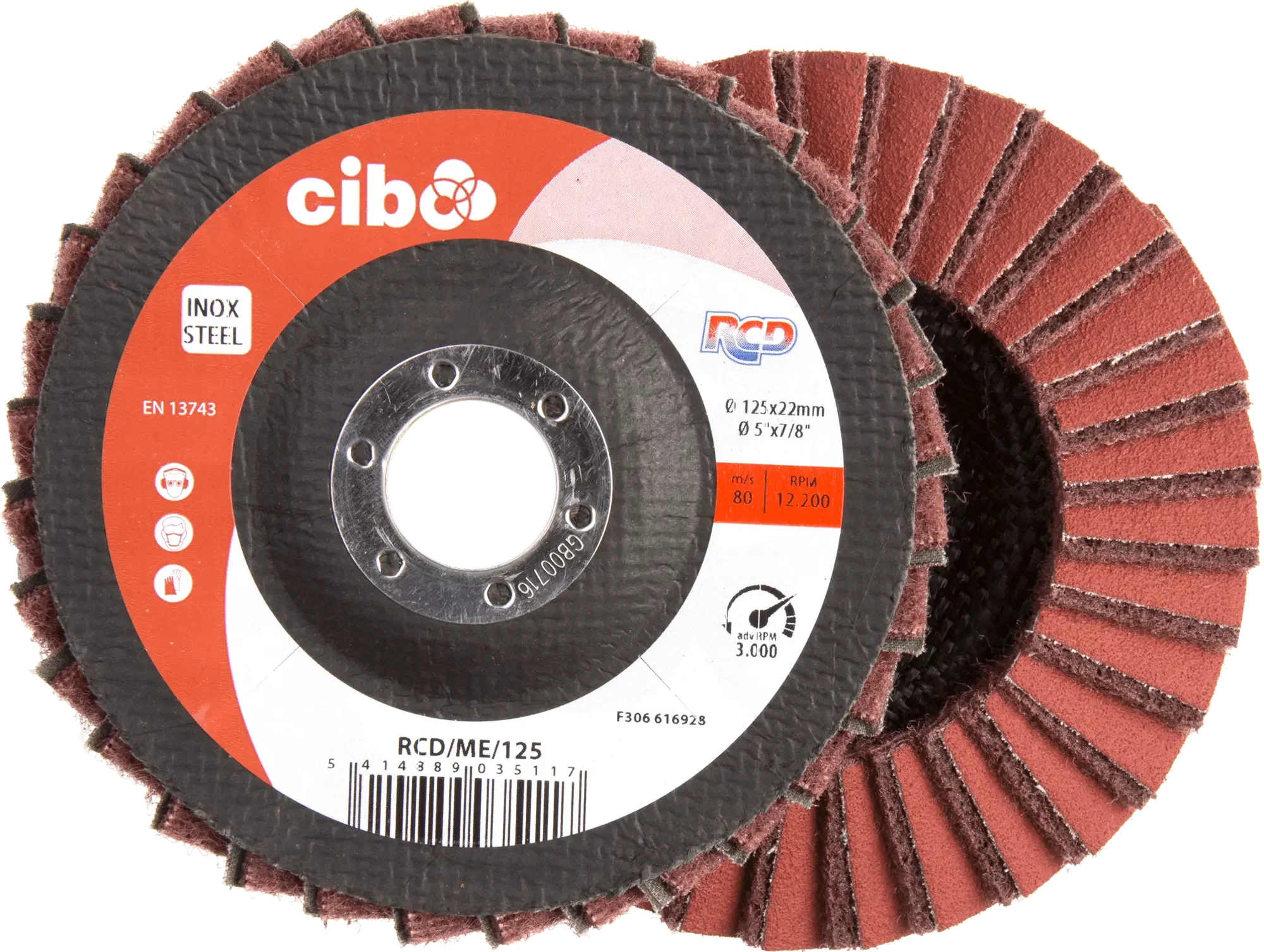
Traditional flap discs grind continuously, without interruption, which causes them to clog quickly. Our flap discs with interruptions and surface conditioning technology ensure constant renewal of the disc.
Recommended products
RCD
Our choice
Grinds and finishes welds in a single step. RCD/UC for heavy welds, RCD/CO and ME for standard weld seams, and RCD/VF for structuring the surface.
Order here
FAC
Economical
Special flap disc with linen and zinc stearate coating; prevents clogging (not for high-quality finishes)
Order herePhase 1
Removing welds in internal or 2D corners of an aluminum workpiece
Welds in internal corners or 2D joints require a different approach than flat surfaces. Due to limited space and difficult access, precision and adaptability of the abrasive materials are crucial.

TA10
Thanks to its robust grain structure, it removes material efficiently without clogging quickly. In addition, the disc provides a smooth and even finish.
Order herePhase 2
Removing scratches on aluminum
Removing scratches without damaging the shape of the workpiece requires a smart choice of abrasive material.
For fine finishing

SAG/2SF
Our choice
Thanks to the open structure of the unitized web and the 3D abrasive material, this disc effectively removes scratches without deforming the workpiece.
Order hereWhen finishing is not important

VTMA/RC2
Economical
An economical solution. Less conforming to the shape and providing a less fine finish, but suitable for parts that will be painted afterward.
Order herePhase 2
Deburring sharp edges
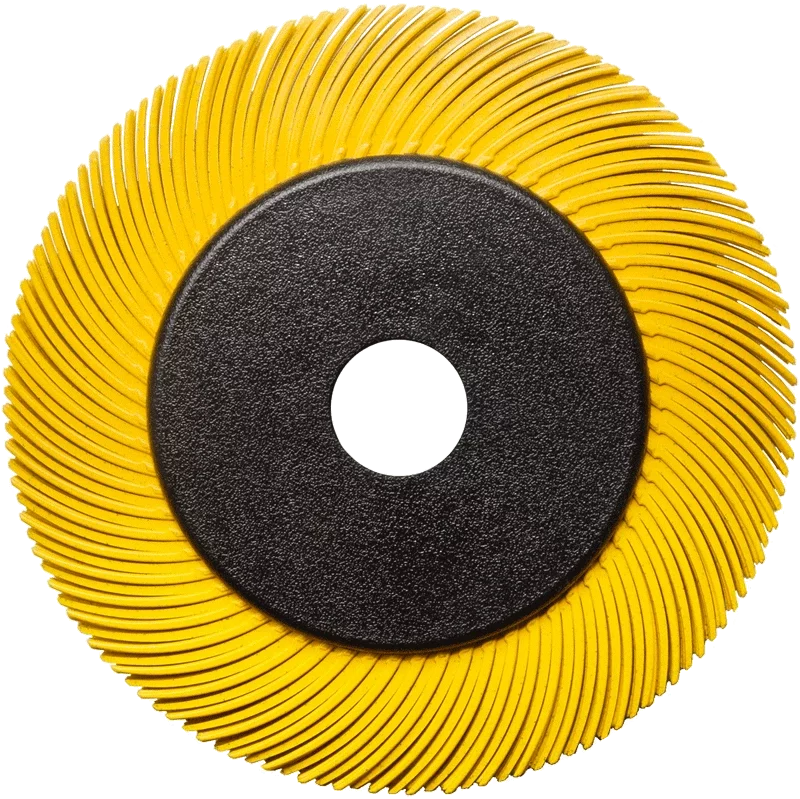
When deburring aluminum edges, a balance must be struck between rounding and maintaining the angle.
Rounding the sharp edge

SA6SF
Our choice
With silicon oxide grit, for rounding and deburring in a single step. Long lifespan.
Order hereMaintaining the sharp edge
Phase 2
Clogging of a cutting disc on aluminum
Aluminum is known for clogging cutting discs, which significantly reduces cutting performance.

SNAN
Our choice
The SNAN cutting disc is a special disc developed for use on aluminum. Its unique composition prevents the disc from clogging while simultaneously protecting the workpiece from damage.
Order herePhase 3
Leveling the surface
After removing welds or scratches, it is important to make the surface even and consistent, especially when the workpiece will undergo further finishing or painting.
Recommended grains
80 – For smoothing out minor imperfections
120 – For a fine, paint-ready finish
Recommended products

331GR
Our choice
The aluminum oxide grit is coated with zinc stearate, which greatly reduces clogging. Our choice for a consistent, durable finish.
Order here
330GR
Economical
With its paper backing (C-weight), this 330GR disc is less tear-resistant but an attractive alternative for less demanding applications.
Order hereFrequently Asked Questions about Working with Aluminum – FAQ
How do you prevent discoloration when grinding aluminum?
Aluminum can quickly oxidize or develop a bluish tint due to heat and friction. Therefore, work with low pressure, use fine grit options (up to P400), and employ cooling abrasives to maintain an even surface.
What grit size do I need for grinding aluminum?
Use grit P60–P120 for removing light burrs or small imperfections, and grit P180–P320 for finishing and preparing for anodizing, painting, or powder coating.What is the difference between grinding aluminum and steel?
Aluminum is softer and more malleable than steel, which makes it clog or deform more quickly. It requires cooler, finer abrasives and lower pressure to maintain shine and shape.Can I polish aluminum after grinding?
Yes. After grinding, aluminum can be polished using fine sandpaper, sanding pads, or polishing compounds to achieve a mirror-like shine.What are common mistakes when grinding aluminum?
Applying too much pressure, using high speed, or using too coarse a grit can cause scratches, discoloration, or deformation. Aluminum can also clog quickly, so regular cleaning is important.Should aluminum be treated after grinding?
It is recommended to clean the surface and, if necessary, anodize, paint, or coat it to prevent oxidation and ensure a durable finish.More information
The Cibo team is there for you
Cibo is at your service with expert advice on sanding, grinding and polishing.
Contact
