
Find the right solution for your application
Working on a weld seam, surface or finish that doesn’t give the result you want? Choose your material and discover step by step how to carry out the operation correctly, with the right products for each phase.
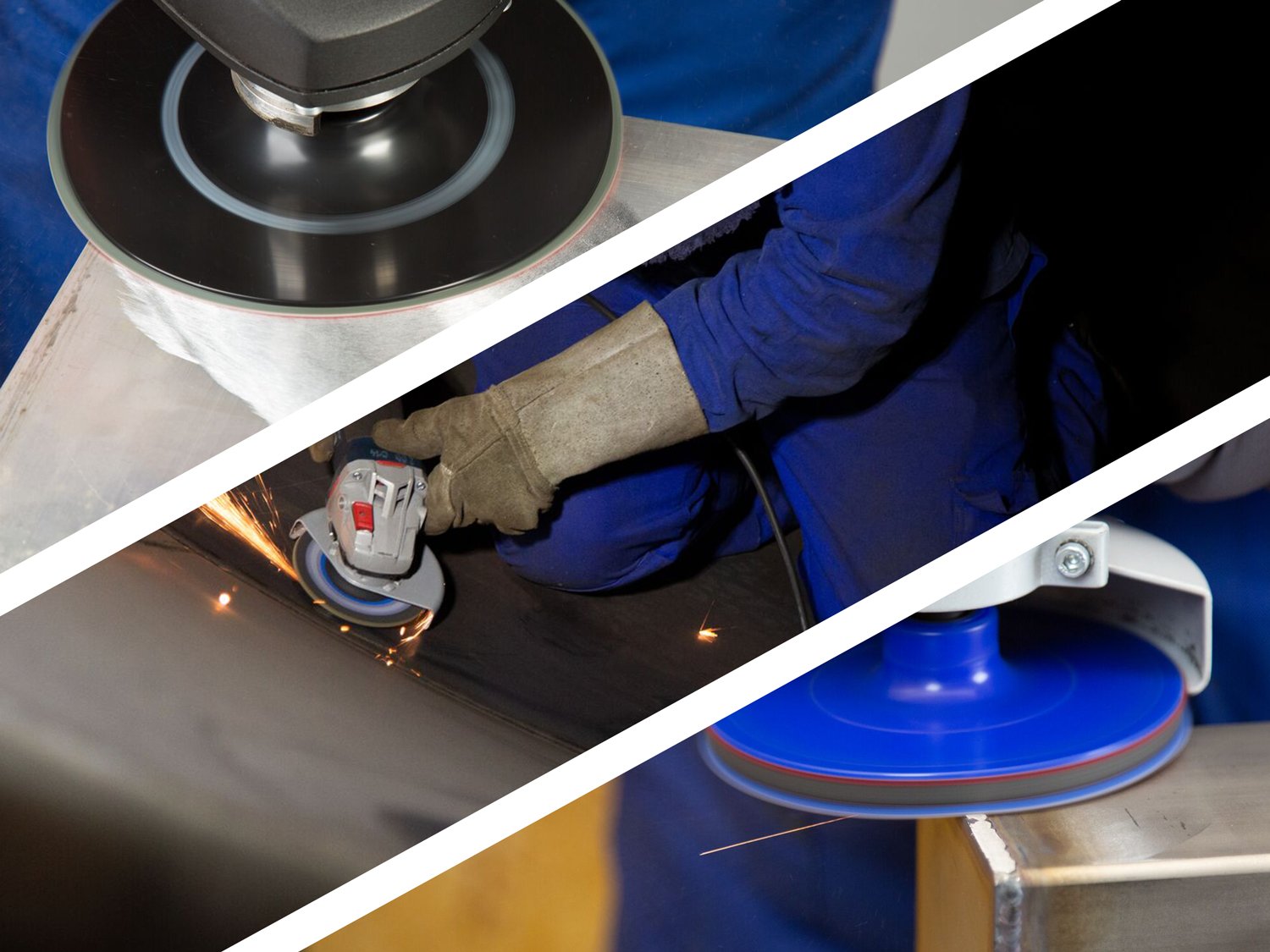
Choose your material
Every material calls for its own approach. Choose your material and find the right abrasives for each operation.
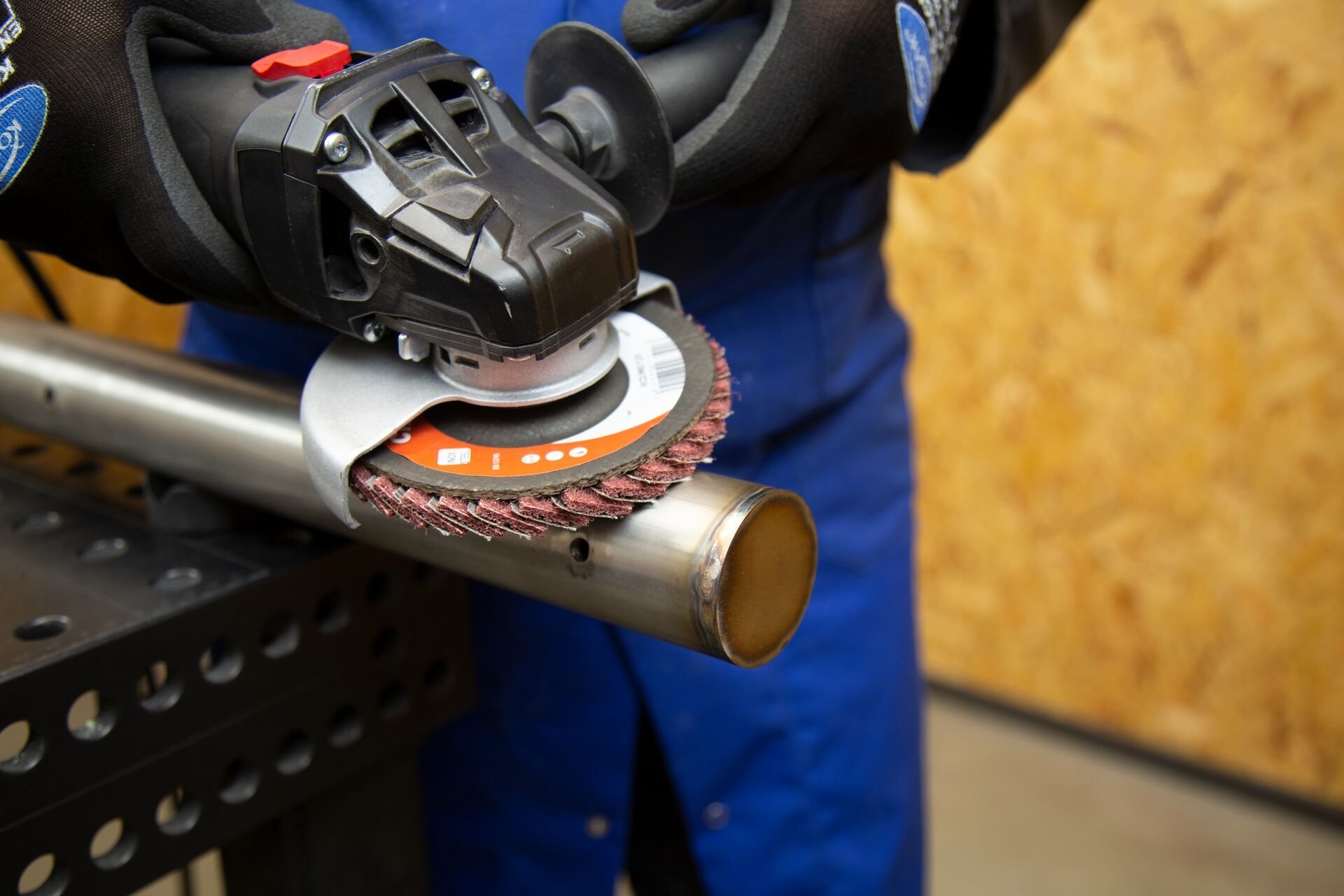
Stainless steel
From removing the weld to a mirror finish, without discolouring the stainless steel.
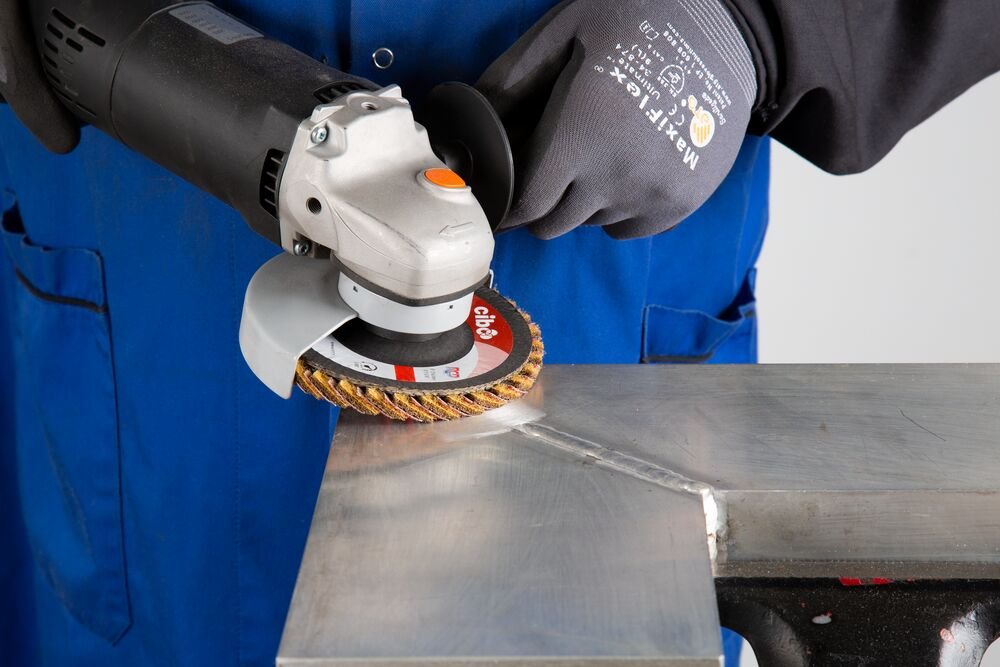
Aluminium
From removing the weld to an even, paint-ready surface, without your disc clogging.
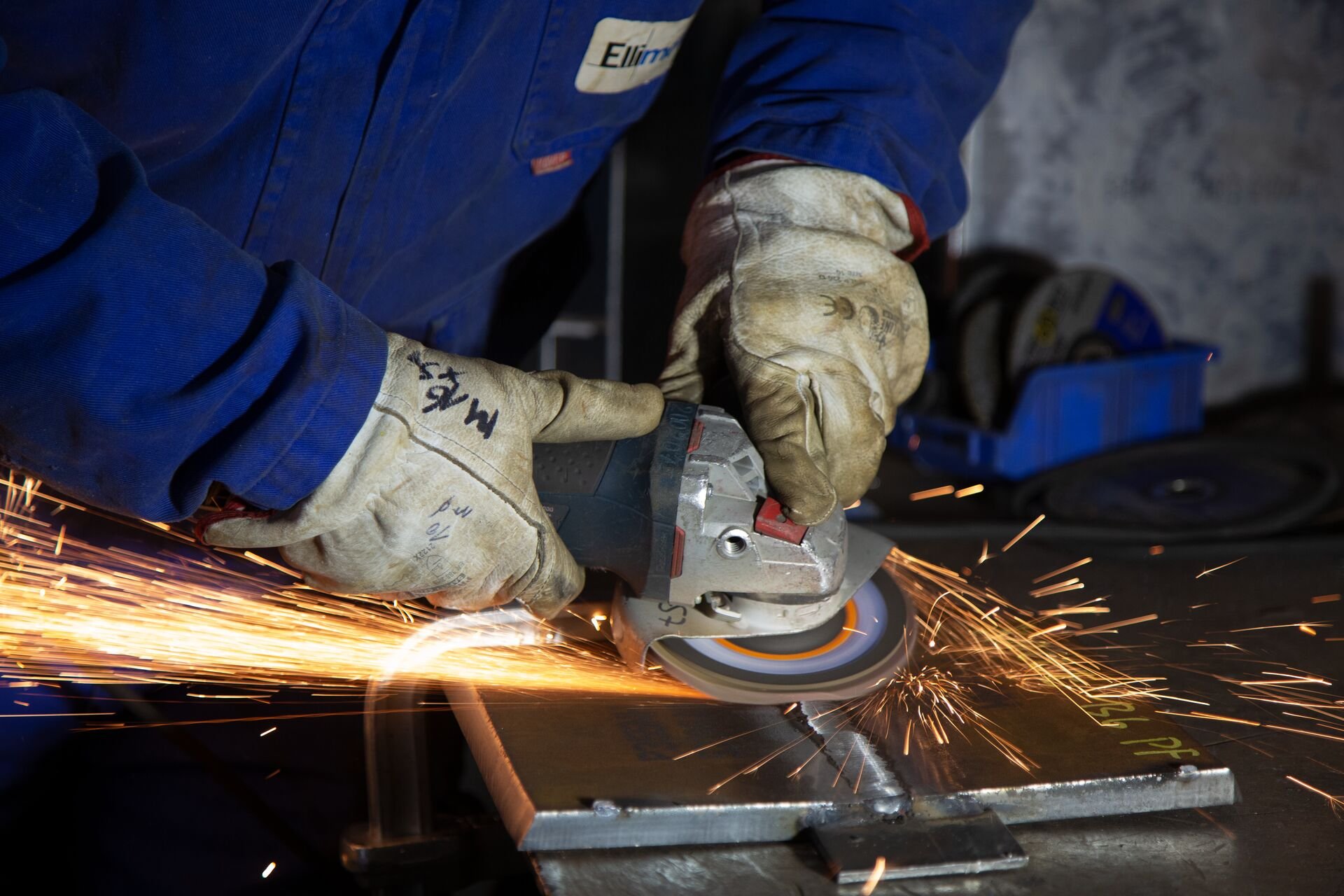
Steel
From removing the weld to an even, paint-ready surface, without overheating or unnecessary material use.
Every operation in three steps
On every material page, you’ll find the operations in the same order. Work from coarse to fine and don’t skip any grit, otherwise the scratches from the previous step remain visible in the finish.
Weld removal
Grind the weld flat, without going too deep into the base material.
Post-processing and cleaning
Remove scratches, burrs and grinding marks as preparation for the finish.
Finishing
An even, uniform scratch pattern as the basis for painting or a final finish.
Short comparison of the materials
| Property | Steel | Aluminium | Stainless steel |
| Strength | Very strong and wear-resistant | Good strength, but less robust than steel | Strong and durable |
| Weight | Heavy | Very light (± 1/3 of steel) | Medium (heavier than aluminium, lighter than solid steel) |
| Corrosion resistance | Moderate, often needs a coating | Good, resistant to corrosion | Very good, rustproof |
| Maintenance | Regularly needed (protective layer, painting) | Low maintenance | Low maintenance, easy to clean |
| Price indication | Relatively cheap | Medium, often more expensive than steel | More expensive than steel and aluminium |
| Typical applications | Construction, machinery, load-bearing structures | Facades, transport, lightweight constructions | Kitchens, medical sector, architectural applications |
Frequently asked questions about grinding by material
What is the difference between stainless steel and inox?
There is no difference: stainless steel and inox are two names for the same material. In Belgium and France it is often called inox, in the Netherlands RVS (roestvast staal).
Why do you use separate abrasives for stainless steel and steel?
Abrasives previously used on regular steel leave iron particles on the stainless steel. These start to rust and leave stains on the surface. That’s why you use separate abrasives for stainless steel.
Why does abrasive clog on aluminium?
Aluminium is a soft metal with a low melting point. Due to the heat during grinding, aluminium particles smear between the grains. The disc then clogs, stops cutting and wears faster. You’ll find more information under aluminium.
In what order do you grind a metal workpiece?
Work in three steps: first remove the weld, then post-process and clean, and only then finish. Work from coarse to fine and don’t skip any grit, so each grit removes the scratches of the previous one.

