
Deburring sharp edges on steel
Working steel often creates burrs that are not only dangerous, but can also interfere with further finishing. With the right deburring solution, you get safe, clean edges without damaging the workpiece.
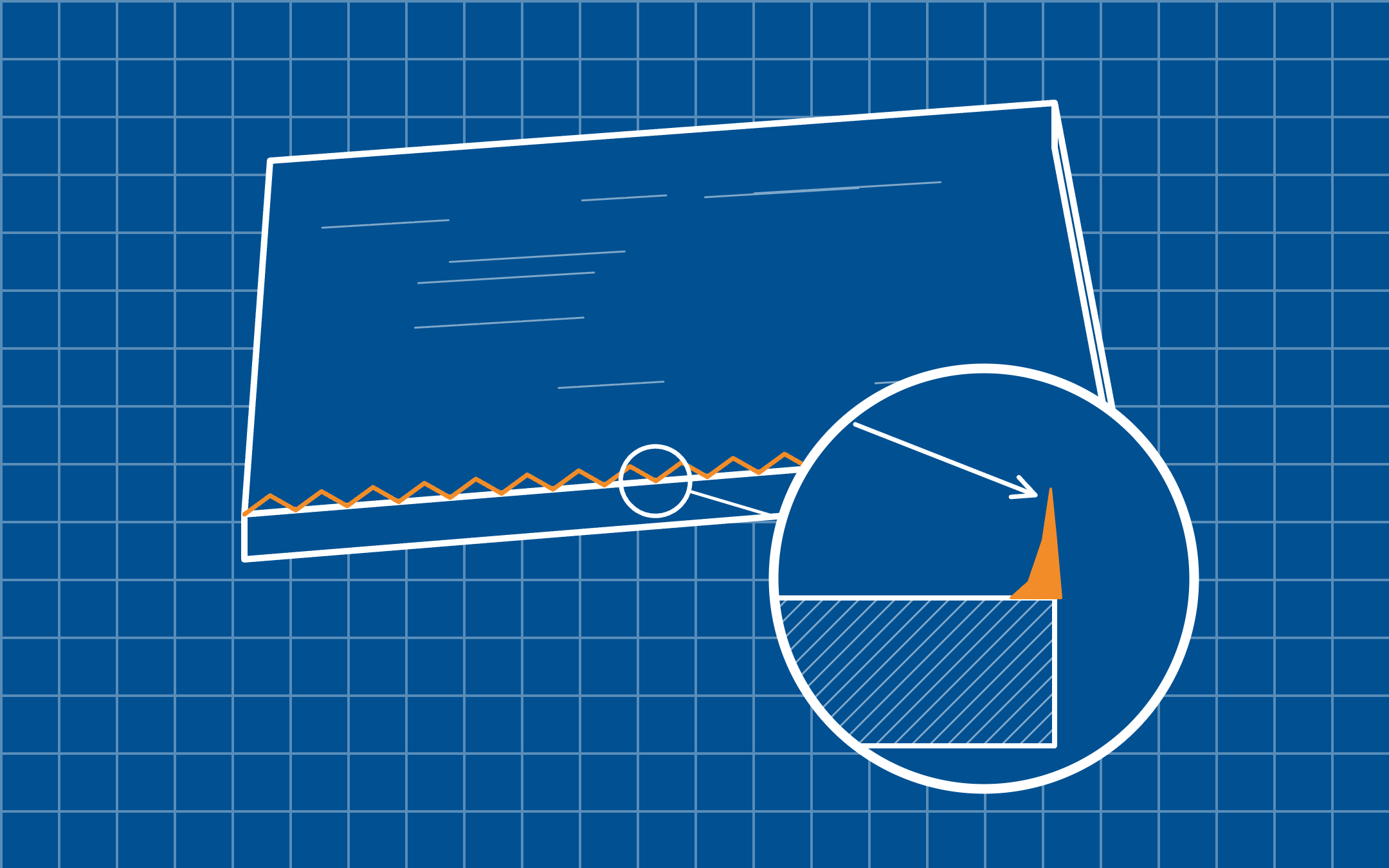
Which product suits your workpiece
The right disc depends on how large and hard the burr is. Choose below between light and heavy burrs.
Light burrs
Small, thin burrs. For these, Cibo recommends the LCGR cloth grip disc. It provides high stock removal, even on high-alloy steels, without damaging the edge.
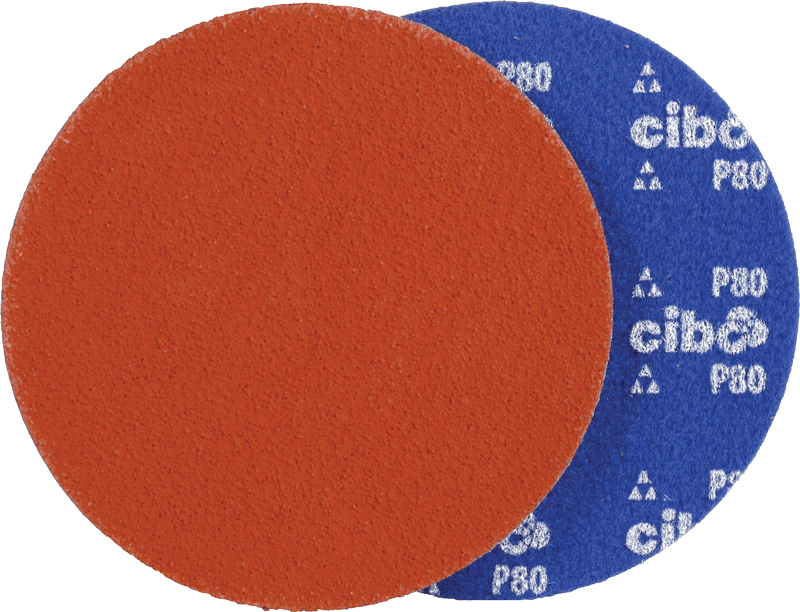
LCGR
Ideal for removing burrs from steel quickly and safely.
- Self-sharpening ceramic grain
- High stock removal
- Flexible, tear-resistant polyester backing
In the video: LCGR cloth grip disc
Heavy burrs
Large, thick or hard burrs, such as after flame cutting or plasma cutting. For these, you work faster with a flap disc in grit 80: the Performance FPC as an all-rounder or the Ultimate FTC for the highest removal.
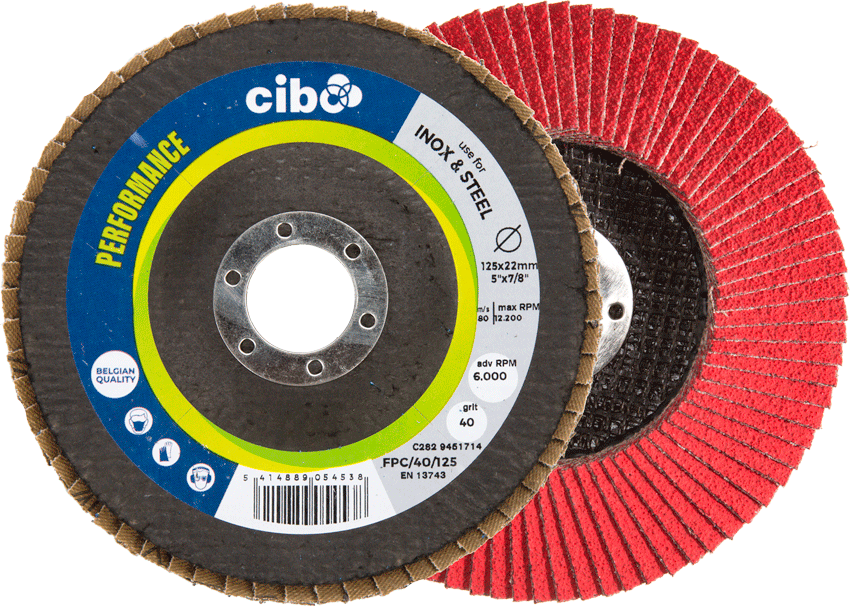
Performance FPC
Versatile disc for quickly grinding away heavy burrs.
- Ceramic and zirconia grains
- In grit 80

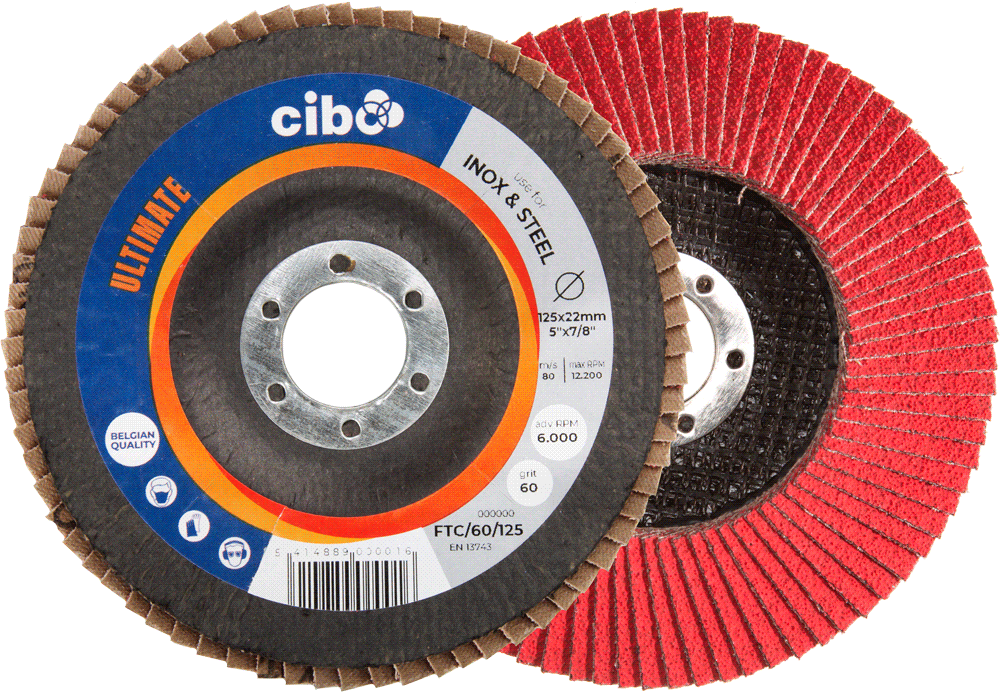
Ultimate FTC
The flap disc with the highest stock removal, for large and hard burrs.
- Ceramic grain
- Maximum performance at high working pressure
- In grit 80
How to deburr steel in 3 steps
Choose your disc
For light burrs, mount the LCGR cloth grip disc: the self-sharpening grain cuts smoothly without extra pressure. For heavy burrs, choose a flap disc in grit 80, such as the Performance FPC or the Ultimate FTC.
Work with controlled pressure
Move evenly along the edge and only work the burr. Do not grind in the same spot for too long.
Check the edge
Check that all burrs are gone. The edge is then safe and ready to be finished, coated or assembled.
Frequently asked questions about deburring steel
How do you remove burrs from steel?
Remove the sharp, protruding parts in a controlled way with a suitable abrasive, such as the LCGR cloth grip disc. Move evenly along the edge and do not apply more pressure than necessary. This way, you remove the burr without unnecessarily removing material from the workpiece.
Which abrasive do you use to deburr sharp steel edges?
For light burrs, Cibo recommends the LCGR cloth grip disc. It has a self-sharpening ceramic grain on a highly tear-resistant polyester backing and provides high stock removal, even on high-alloy steels. This quickly gives you a clean, safe edge. For heavy burrs, a flap disc in grit 80 is a better choice, such as the Performance FPC or the Ultimate FTC.
Why is it important to remove sharp edges and burrs?
Sharp edges and burrs can cause cuts and cause problems in further processing. Correct deburring gives you a safer, clean edge that is ready for finishing, coating or assembly.
How do you deburr steel without damaging the edge?
Use controlled pressure and let the abrasive do the work. Only work the burr and do not grind in the same spot for too long. A self-sharpening grain, such as that of the LCGR, cuts smoothly without you having to apply extra pressure. This way, the shape of the edge is preserved.

