
Removing scratches from flat stainless steel
You grind away scratches on a flat stainless steel workpiece in the direction of the existing finish. Watch the pressure and heat to prevent deformation or discolouration. Which product you choose depends on how smooth the surface needs to be.
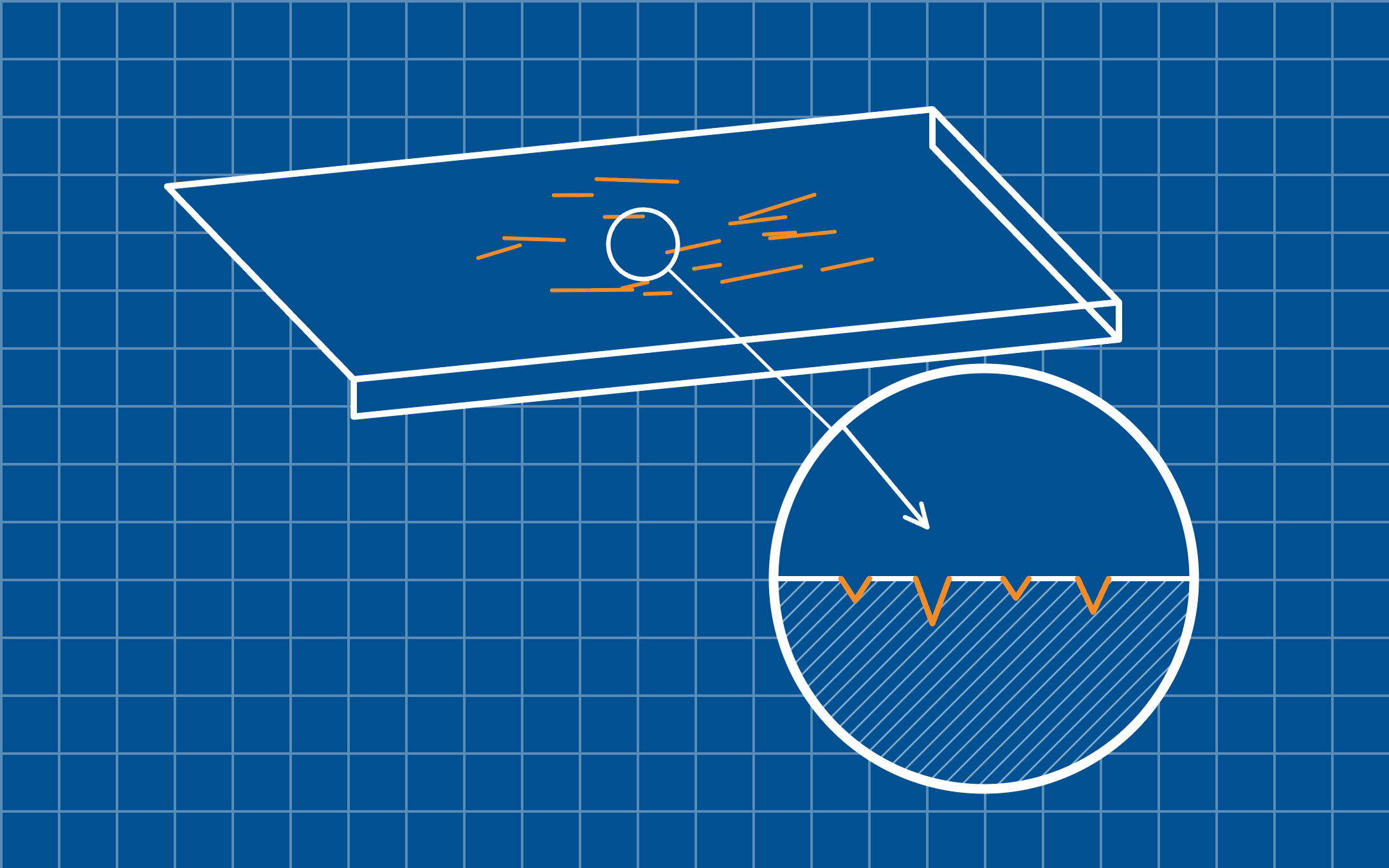
Which product suits your workpiece
Choose based on the result: grind away scratches and then finish finer, or remove scratches quickly.

LKGR
Ideal if you want an even smoother finish after grinding.
- Wide grit range, from grit 80 to 1400
- Cost-effective to use
- Finish with the same disc in finer grits




VTMA
Ideal for removing scratches quickly.
- Even finish at low pressure
- Up to grit 320, less fine than the LKGR


In the photo: LKGR cloth grip disc
How to grind away scratches on flat stainless steel in 3 steps
Choose your disc
Want to finish even finer after grinding? Choose the LKGR. Mainly want to remove scratches quickly? Choose the VTMA.
Work in the direction of the finish
Grind in the same direction as the existing finish, with light and even pressure. Keep moving to prevent heat and discolouration.
Work step by step to finer grits
Only move to a finer grit once all scratches from the previous grit are gone and the scratch pattern is the same everywhere.
Frequently asked questions about removing scratches on flat stainless steel
How do you remove scratches from a flat stainless steel surface?
Work in the direction of the existing finish and start with a grit that is just coarse enough to remove the scratch. Then work step by step to finer grits. Watch the pressure and heat, so the stainless steel doesn’t deform or discolour.
Do you choose the LKGR or the VTMA to remove scratches from stainless steel?
The LKGR has a wide grit range and is cost-effective to use. Want an even smoother surface? Then finish further with the same disc in finer grits. The VTMA is ideal for removing scratches quickly, but there are no finer grits for further finishing.
How do you prevent new scratches when grinding stainless steel?
First make the surface dust-free and don’t skip any grit steps: each grit must completely remove the scratches of the previous one. Also don’t use abrasives that were previously used on regular steel, as iron particles cause scratches and rust stains.

