
Grinding stainless steel to a target Ra value
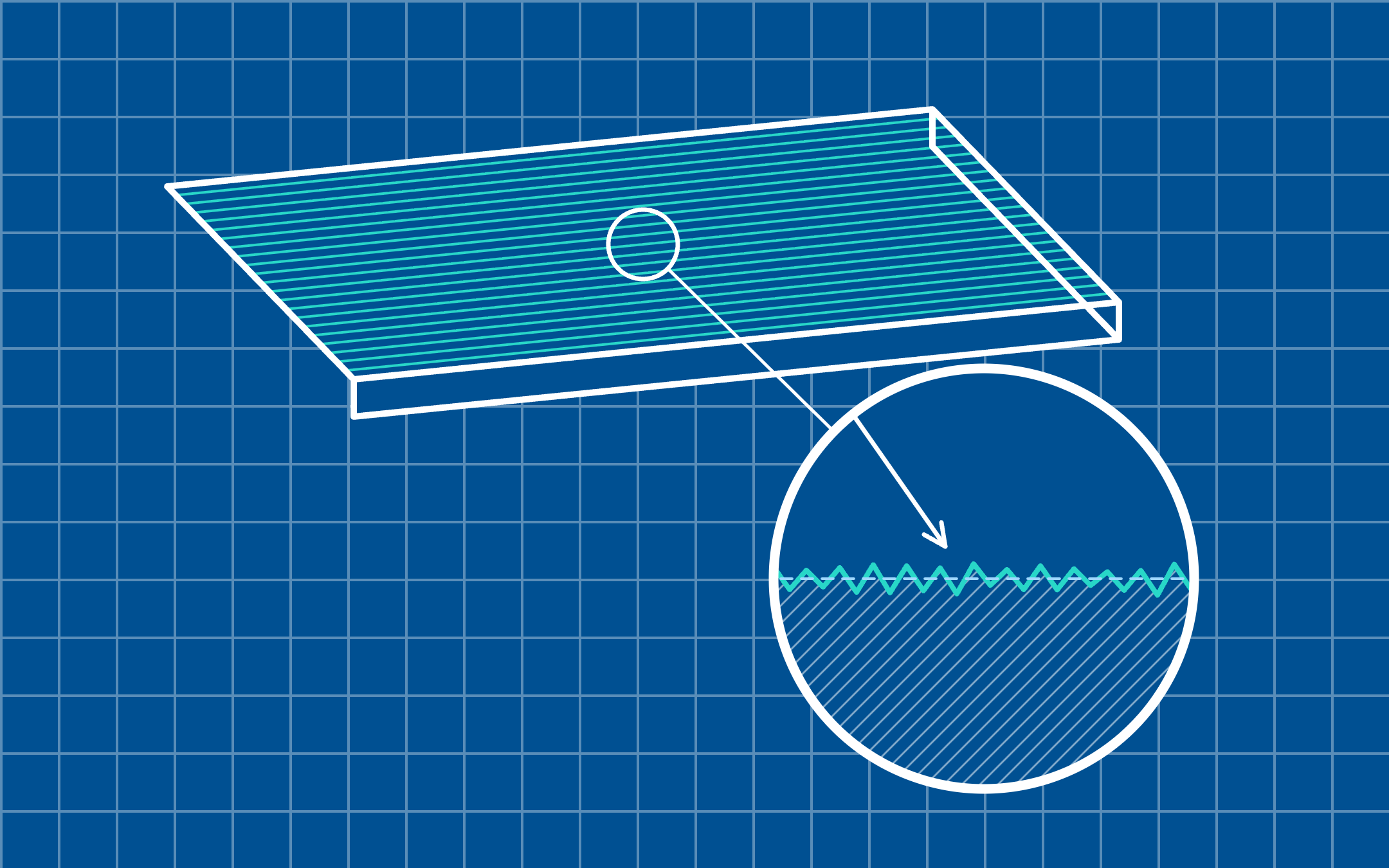
To achieve a specific Ra value, you grind stainless steel with increasingly finer abrasives. You start with a coarser grit to remove defects and finish with a fine grit for the desired roughness. Our Unitized range is extremely suitable for this.
Which product suits your Ra value?
Unitized grinds cool, does not change the workpiece and gives a consistent result. Choose the line that matches the Ra value you are looking for. In the table below, you’ll find the value per product.
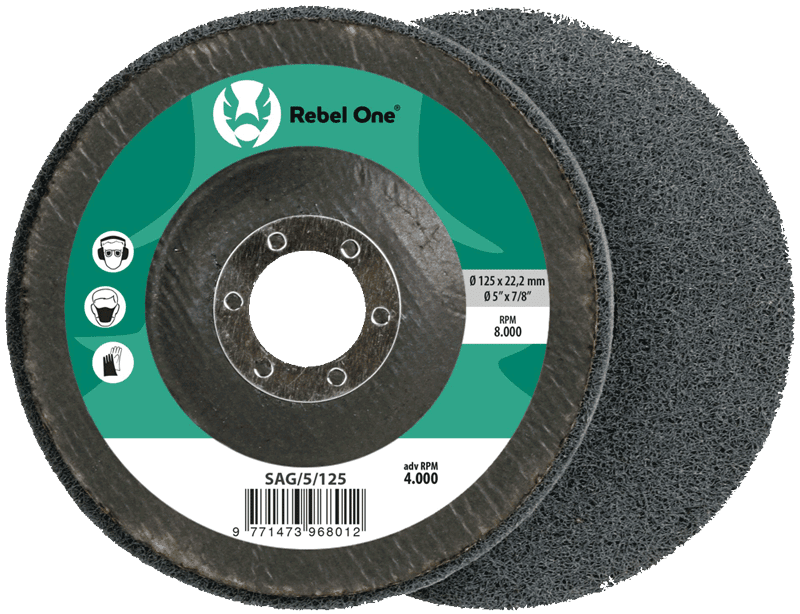
S-line
Ideal if you want to achieve the lowest Ra values.
- Ra from 0.16 to 0.41 µm
- Discs and wheels
- Cool and forgiving
- Safe for stainless steel (iron-free)



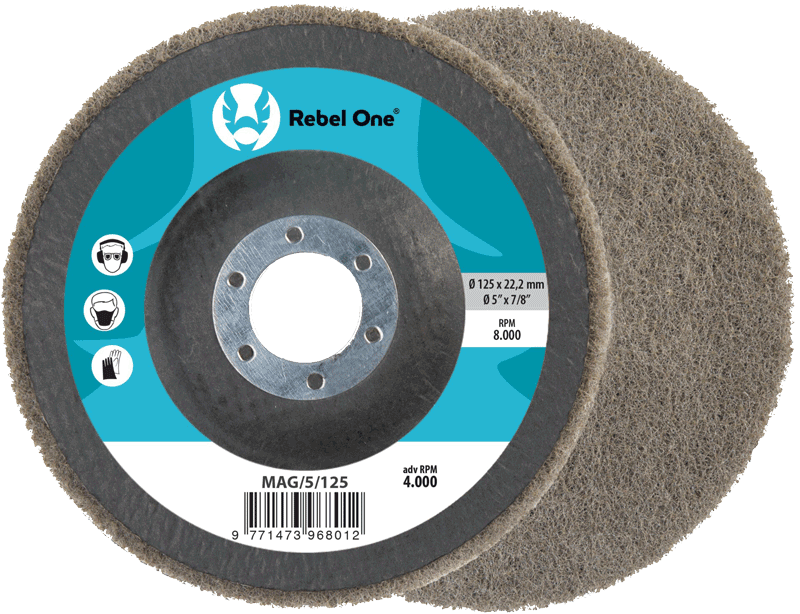
M-line
Ideal for a wide range of Ra values.
- Ra from 0.31 to 0.89 µm
- Discs and wheels
- Cool and forgiving
- Safe for stainless steel (iron-free)
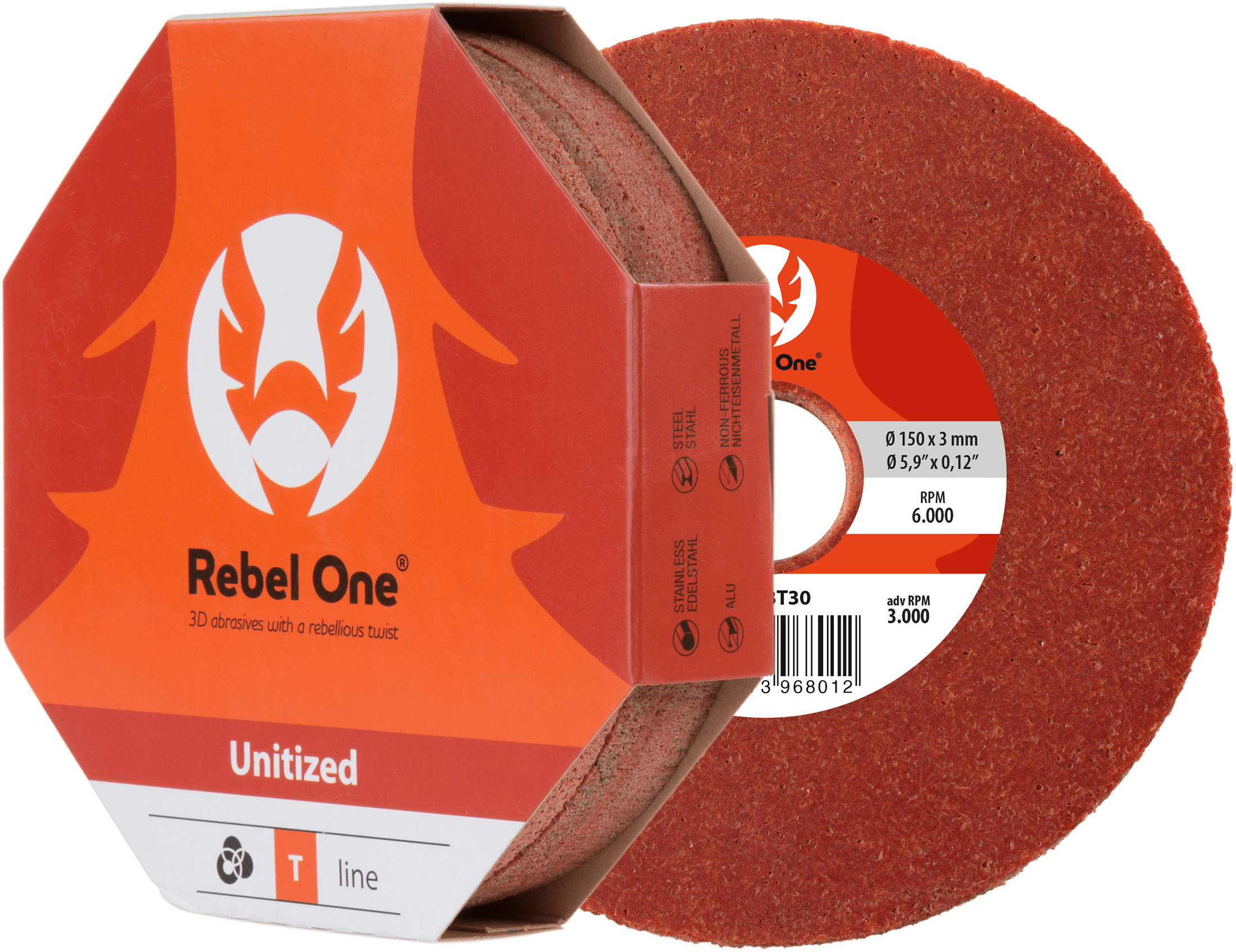
T-line
Ideal for a coarser Ra value around 1.59 µm.
- TA10T31: Ra 1.59 µm
- Less risk of discolouration
- Safe for stainless steel (iron-free)

In the photo: MAG disc (Rebel One M-line)
Unitized Ra value table
The measured Ra value per product, in µm. The lower the value, the smoother the surface.
Unitized S-line
Unitized M-line
How to grind stainless steel to an Ra value in 3 steps
Start with a coarse grit
Start with a coarser grit to remove defects and deep scratches.
Work increasingly finer
Grind in steps with increasingly finer abrasives. Remove the scratches from the previous step each time.
Finish at the desired Ra value
For the last step, choose the product from the table that gives the desired Ra value. Then measure the result.
Frequently asked questions about grinding stainless steel to an Ra value
What is an Ra value for stainless steel?
The Ra value is the average roughness of a surface, expressed in micrometres (µm). The lower the Ra value, the smoother the surface. In sectors such as food and pharma, a maximum Ra value is often required.
How do you achieve a specific Ra value on stainless steel?
Grind with a series of increasingly finer abrasives: start coarse to remove defects and finish with a fine grit that gives the desired roughness. Our Unitized range is very suitable for this: it grinds cool, does not change the workpiece and gives a consistent result.
Which abrasives do you use for a low Ra value?
For a low Ra value, choose the Rebel One S-line. In our tests, the SAG/5 (125 mm) achieved an Ra of 0.16, the SAG/6 0.20 and the SAG/7 0.22. The M-line gives a slightly rougher surface, for example 0.32 with the MAG/5.
Why is a consistent Ra value important?
A consistent Ra value ensures that every workpiece has the same quality. This is important for hygiene, cleanability and corrosion resistance, and is often a requirement in technical specifications.
How do you check whether the desired Ra value has been achieved?
Measure the roughness with a roughness tester at several places on the workpiece, perpendicular to the grinding direction. If you work with unitized abrasives, you get a reproducible result and need to make fewer adjustments.

