
Removing scratches from round stainless steel
You grind away scratches on a round stainless steel workpiece with arc-shaped movements that follow the curve. Which product you choose depends on how deep the scratches are.
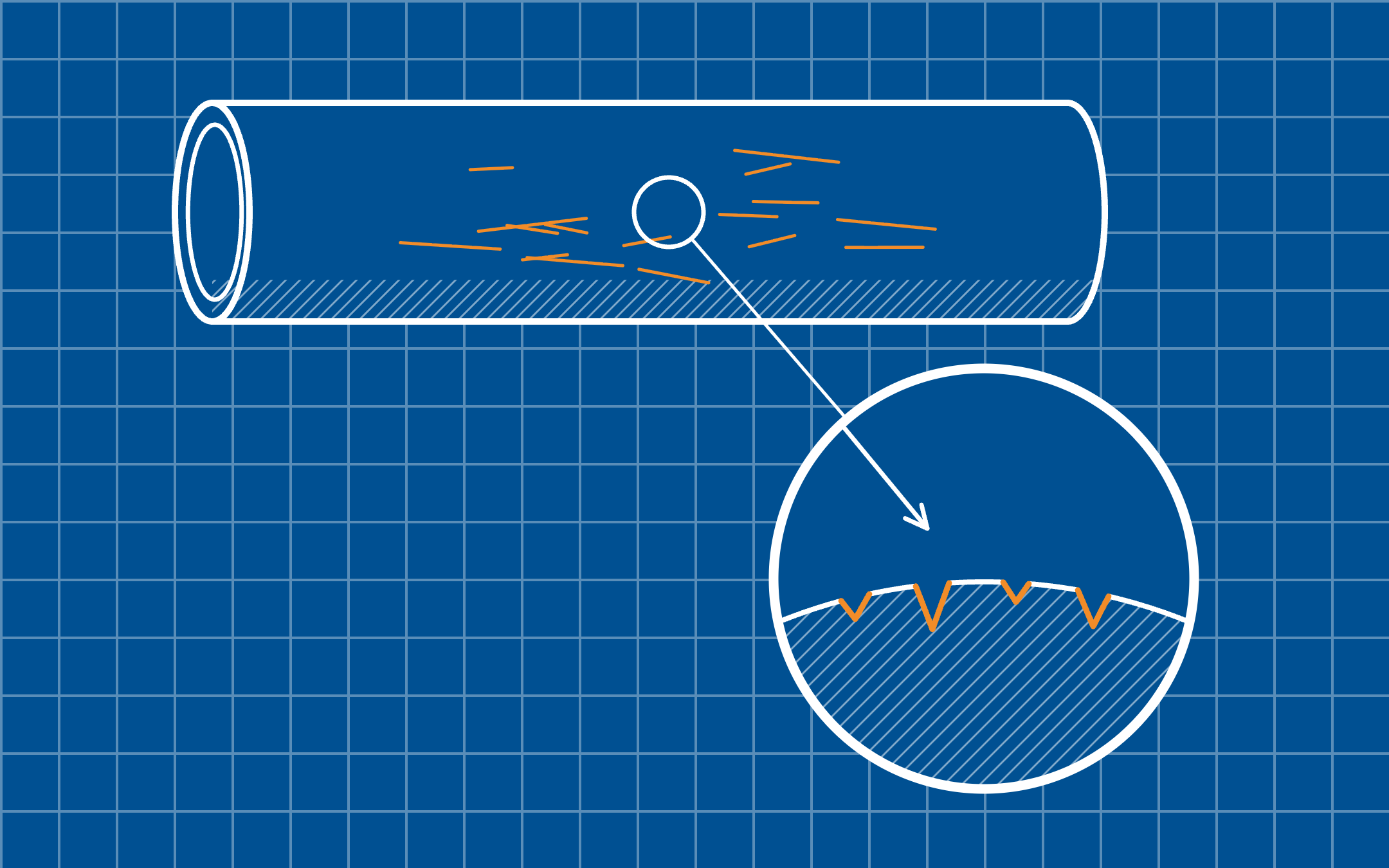
Which product suits your workpiece
Choose based on how deep the scratches are: superficial grinding scratches or deeper scratches in a brushed tube.

SAG/5
Ideal for superficial grinding scratches.
- Removes scratches without changing the shape
- Flexible, follows the curve of the workpiece
- Unitized disc for an even finish




LVT
Ideal for deeper scratches in a brushed tube.
- Even finish, even with less experience

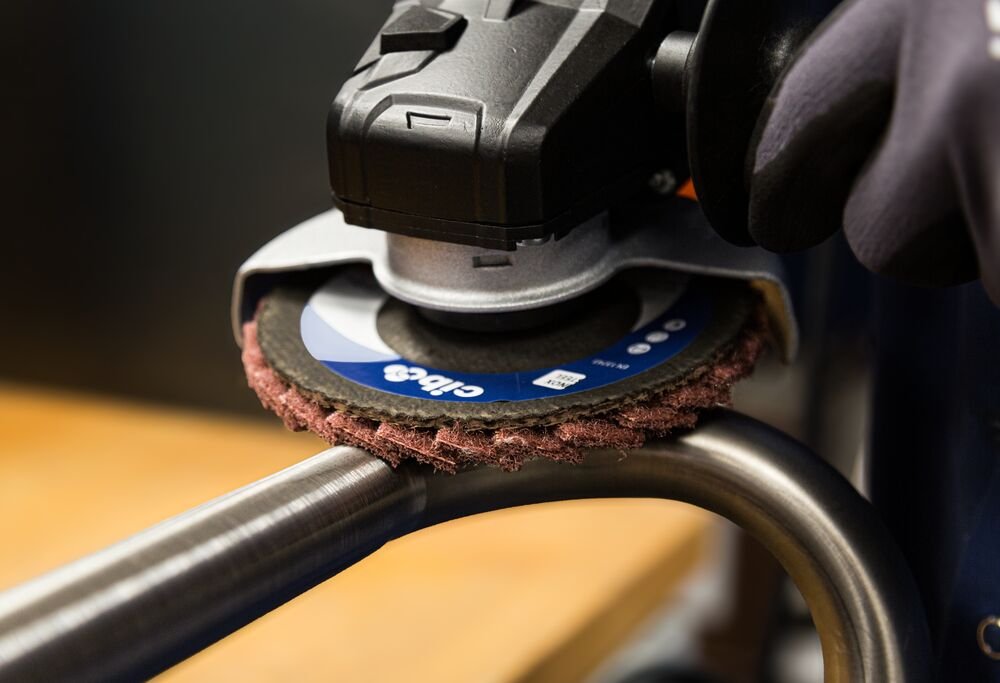
In the photo: LVT flap disc
How to grind away scratches on round stainless steel in 3 steps
Check how deep the scratches are
For superficial grinding scratches, choose the SAG/5. For deeper scratches in a brushed tube, choose the LVT.
Follow the curve
Work in arc-shaped movements with light, even pressure. Keep moving to prevent flat spots.
Work step by step to finer grits
Only move to a finer grit once all scratches from the previous grit are gone and the scratch pattern is the same everywhere.
Frequently asked questions about deburring stainless steel
How do you remove scratches from a round stainless steel workpiece?
Work in arc-shaped movements that follow the curve and use light, even pressure. Start with a grit that just removes the scratch and work step by step to finer grits. This prevents deformation and new scratches.
Which abrasive do you use for superficial scratches on round stainless steel?
For superficial scratches, use the SAG/5 unitized disc. It removes the scratches without changing the shape of the workpiece.
How do you repair deep scratches in a brushed stainless steel tube?
Use the LVT conical flap disc in reinforced Tex. It removes deeper scratches and restores the existing brushed structure with a consistent, even finish, even if you have less experience.
When do you move to a finer grit?
Only when all scratches from the previous grit are completely gone and the scratch pattern is the same everywhere. If you move on too early, old scratches remain visible in the finish.
Why is a round workpiece more difficult than a flat surface?
The contact area with the disc is small, so you quickly grind too much in one spot. This creates flat spots or an uneven finish. So keep moving and follow the curve of the workpiece.

